Keep It Human: A Creator's Honest Guide to Using AI Without Selling Out Your Style

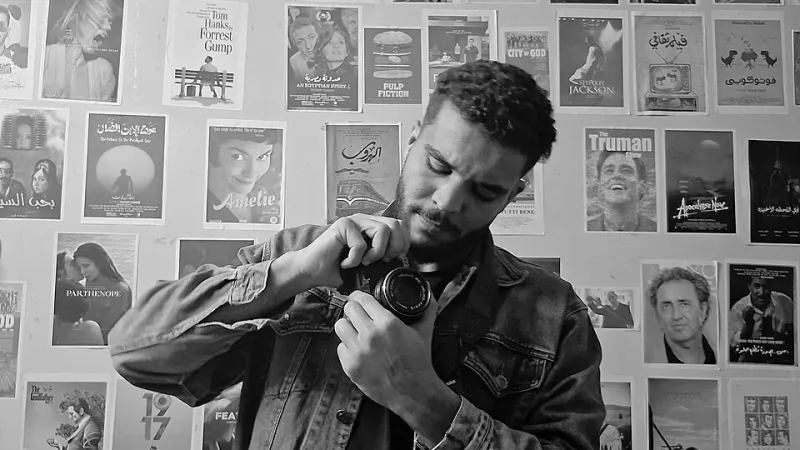
Photo: Kolptuilai, CC BY-SA 4.0, via Wikimedia Commons
Let me paint you a picture. You've spent three years building an audience on YouTube. People subscribe because of you — your sense of humor, the way you frame a story, the weird specific references you make that somehow land with exactly the right crowd. Then one day, a viewer comments: "Did you use AI to write this?" And suddenly you're in an existential spiral at 7 a.m. over a cup of coffee.
This is the conversation happening in creator communities across the US right now, and honestly? It's a good one to be having. AI tools have gone from novelty to infrastructure faster than most of us were ready for. The question isn't really whether to engage with them — it's about understanding what you're actually putting at risk when you do, and what you might be leaving on the table if you don't.
This isn't a pep talk for AI, and it's not a warning against it. It's an attempt to think through this honestly, from one creative to another.
The Fear Is Legitimate — Let's Not Dismiss It
First, let's acknowledge what's actually driving the anxiety. It's not technophobia. Creators who are nervous about AI tools aren't scared of software — most of them are already using editing programs, color grading suites, and digital audio workstations that would have seemed like science fiction twenty years ago.
The specific fear is about voice. In filmmaking and digital content, voice is everything. It's the ineffable quality that makes one creator's video about, say, coffee brewing feel completely different from another creator's video on the exact same subject. Voice is the sum of your instincts, your experiences, your aesthetic preferences, and your particular way of seeing the world. It took years to develop. It can't be downloaded.
So when a tool promises to generate a script, suggest a narrative structure, or auto-edit your footage based on "optimal engagement patterns," the alarm bells that go off aren't irrational. They're your creative instincts telling you to pay attention.
The real question is: are those alarm bells warning you about the tool itself, or about how you're using it?
Where AI Actually Helps (Without Getting in the Way)
Here's a useful mental model: think about your creative process as having two distinct layers. The first layer is the generative work — the ideas, the storytelling decisions, the emotional beats, the specific choices that make your content feel like yours. The second layer is the operational work — the logistics, the admin, the repetitive technical tasks that need to happen but don't require your creative fingerprint.
AI tools, at their best, are genuinely excellent at that second layer. And when they're doing that work, they're not replacing your voice — they're freeing it up.
Some concrete examples from creators who've found this balance:
Transcription and captioning. Tools like Descript or Otter.ai can transcribe hours of interview footage or raw talking-head content in minutes. That's not creative work — it's data entry. Offloading it means more mental energy for actual editing decisions.
Research aggregation. When you're in pre-production and need to get up to speed on a topic quickly, AI can surface sources, summarize context, and flag angles you might not have considered. You still evaluate, filter, and decide what's actually relevant. The thinking is still yours.
Thumbnail and title testing. Some creators use AI tools to generate multiple thumbnail concepts or headline variations, then apply their own judgment to select and refine. The AI is a brainstorming partner, not a decision-maker.
Rough cut assistance. Auto-edit features in tools like Premiere Pro's AI-assisted editing can produce a functional rough assembly from raw footage. Most creators who use this treat it as a starting point to react against, not a finished product. Seeing a bad cut can actually clarify what you actually want.
None of these use cases require you to hand over creative authority. They require you to stay in the driver's seat while letting technology handle the stuff that was draining your tank.
The Authenticity Line: You Know It When You Cross It
Okay, so where does it go wrong? When does AI assistance tip over into something that actually does compromise your creative identity?
Honestly, it's a feeling more than a formula. But there are some patterns worth watching for.
If you're using AI to generate your perspective — not just your first draft, but your actual point of view on a subject — that's a problem. Your audience isn't subscribing to well-organized information. They're subscribing to your take on things. The moment your content starts reflecting what an algorithm thinks is the optimal creative position rather than what you actually believe, your audience will feel it, even if they can't name it.
Similarly, if you're using AI to paper over a gap in your own creative development — leaning on generated scripts because you haven't invested in learning to write, or auto-generating visual styles because you haven't developed your own aesthetic — you're building on sand. Those skills compound over time. Skipping them doesn't make you more efficient; it makes you more replaceable.
The creators who use AI most effectively aren't doing so because they lack skills. They're doing it because they have strong creative instincts — and those instincts are what allow them to use AI outputs as raw material rather than finished product.
A Practical Framework for Keeping Your Voice Intact
If you want a simple gut-check for any AI tool or workflow you're considering, run it through these three questions:
-
Am I still making the creative decisions? If the answer is yes — if you're evaluating, selecting, rejecting, and refining — you're in good shape. If the tool is making the calls and you're just hitting approve, pause.
-
Would my audience recognize this as mine? Your content should still feel like it came from you. If a script, a visual treatment, or an edit feels generic or interchangeable with a hundred other creators, something's been lost in the process.
-
Is this freeing me up or making me lazy? There's a real difference between using AI to handle tedious logistics so you can focus on storytelling, and using AI to avoid the hard creative work that actually builds your craft. One makes you better. The other quietly erodes what makes you worth watching.
The Bottom Line
AI isn't going to make you irrelevant — but using it thoughtlessly might. The creators who are going to thrive in this environment are the ones who have a clear enough sense of their own voice that they can use any tool, AI or otherwise, without losing it.
Your perspective, your experiences, your weird specific references that somehow land with exactly the right crowd — no model is trained on that. That's yours. Protect it, develop it, and let the robots handle the transcription.