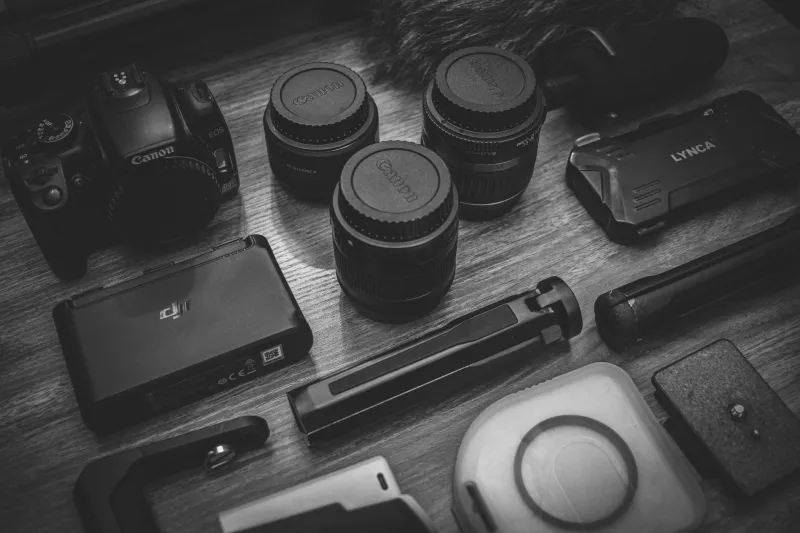
The $4,000 Dust Collector: How to Know When Gear Belongs on Your Shelf (or Someone Else's)
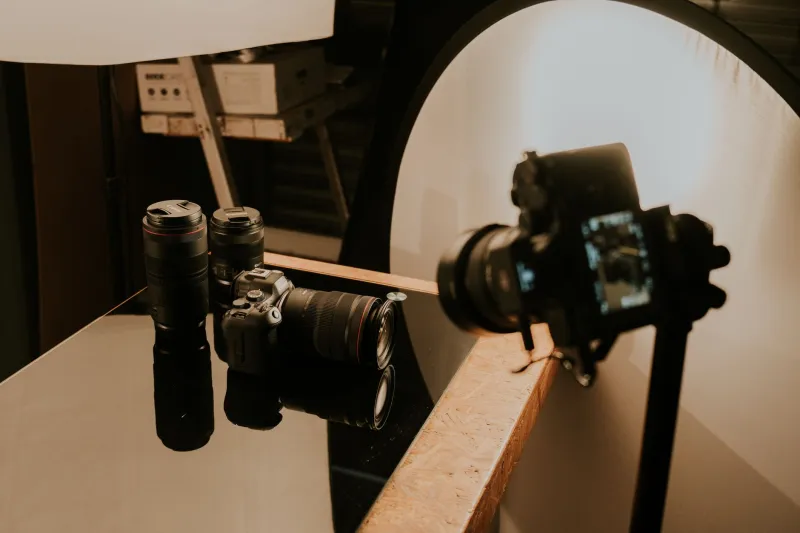
Somewhere in America right now, there's a camera bag in a closet holding a $3,500 body that's been opened exactly four times since last June. Next to it, probably, is a three-light kit that smells faintly of one music video from 2022.
We all know this gear. Some of us are this gear.
The question isn't whether owning equipment feels good — it obviously does. The question is whether it makes financial sense, and the answer is more boring and more useful than most YouTube "gear haul" videos will ever tell you.
The Only Math That Matters
Here's the framework rental houses have quietly used for decades, and it fits in one sentence: a purchase only makes sense if the gear pays for itself before it becomes obsolete.
Everything else is decoration. Expensive, heavy, quickly-depreciating decoration.
The working version looks like this:
- Take the purchase price. Include tax, and be honest about the accessories you'll "need" within a month (you will need them — everyone does).
- Subtract what you'd get selling it in three years. Most pro video gear holds value like a phone does, which is to say: badly. Assume you'll recoup 40–50% if you're lucky.
- Divide the real cost by your rental rate. If the same kit rents for $150/day locally, that's your break-even clock.
A $4,000 lighting package that nets you $2,000 after resale? That's $2,000 of "savings" you need to generate. At $150 a rental day, you need to use it fourteen times before you've broken even. Fourteen booked days. Not fourteen months of ownership — fourteen paid days.
That number surprises almost everyone who runs it for the first time.
We Asked People Who Actually Do This
We talked to freelancers in Chicago, Austin, and Atlanta, plus two rental houses, and the pattern was remarkably consistent.
Audio gear: buy it. A decent shotgun mic, lavs, and a recorder run $800–1,500 and get used on essentially every shoot. One Chicago-based corporate freelancer put it bluntly: "My audio kit has never had a day off. It's the only purchase I've never once regretted."
Cameras: usually rent. Bodies update fast, and rental houses upgrade too — meaning the $200/day camera you rent is often newer than anything you could afford to buy. The exception is if you shoot 30+ days a year with consistent clients. Then ownership math starts working.
Lighting and grip: it depends on your niche. Wedding and event shooters use lights constantly. Narrative folks? You might light three projects a year. A rental house manager in Texas told us the same story over and over: "People buy a full kit for one passion project, then rent from us anyway because storing and transporting it is a pain."
Lenses: the trap. Glass holds value better than bodies, which seduces people into buying. But unless you're shooting constantly in one focal length, a $2,500 prime you use twice a year is a very slow leak.
The Hidden Costs Nobody Puts in the Spreadsheet
Purchase price is just the cover charge. Owning gear also means:
- Insurance — either a rider on your homeowner's policy or a separate equipment policy, typically $400–800 a year for a serious kit
- Storage — climate-controlled, secure, and taking up space you're paying rent on
- Maintenance and repairs — a shutter replacement or a fried sensor can run $600+
- Transport — cases, carts, a bigger vehicle, or just the sheer physical misery of hauling your own gear up four flights
Add it up and ownership often costs 10–15% of the purchase price annually before you shoot a single frame. Renting bundles all of that into the daily rate. Someone else owns the failure risk.
When Buying Is Actually the Smart Move
To be fair to Team Ownership, there are real cases where buying wins:
- You use it on nearly every job. Frequency is everything. A $900 gimbal used on 40 shoots a year is a bargain; the same gimbal used twice is a planter.
- Rentals aren't available nearby. If the closest rental house is two hours away, the math shifts hard toward ownership.
- The gear is cheap relative to your day rate. Anything under a few hundred dollars that removes friction from your workflow is usually worth it.
- Clients expect consistency. If your brand depends on a specific look you can only get from gear you own and know cold, that's a legitimate business expense.
Try This Before You Tap Your Card
Before your next big purchase, run a simple test: rent the exact gear for your next two jobs. Pay full rental price. If those two rentals cost less than 10% of the purchase price and you didn't love the gear enough to miss it — you just saved yourself thousands.
If you find yourself renting the same thing three times in six months, congratulations. That's your brain telling you it's a real line item, and now the purchase is justified by data instead of a 2 a.m. gear-lust spiral.
The goal was never to own cool things. The goal was to make cool things — and keep more of the money you make doing it. Sometimes that means buying. Often it means letting the rental house deal with the dust.
Your closet will thank you.