Five Grand a Video, Two Hundred Bucks of Gear: Inside the Kits of Working Freelancers
There's a ritual every aspiring videographer goes through. You watch a behind-the-scenes video, you see the ARRI Alexa and the $12,000 cine lens, and you quietly open a new tab to price out camera bodies you cannot afford. Then you look at your bank account, sigh, and wonder if you'll ever book real clients.
Here's the thing nobody tells you: a huge chunk of working freelancers in the US — the ones invoicing $3,000, $5,000, even $8,000 per video — are carrying kits that cost less than a used Honda Civic's down payment. We're talking $200 to $600, total. Not because they're broke. Because they've figured out something the gear-obsessed haven't.
What Clients Are Actually Buying
Let's get the uncomfortable truth out of the way first. When a small business owner in Denver or a restaurant group in Nashville pays you five grand for a brand video, they are not evaluating your sensor. They cannot tell the difference between footage shot on a Sony A7 IV and footage shot on a Blackmagic 6K in a YouTube compression test — and frankly, neither can their audience.
What they're buying is:
- Reliability. You showed up on time. The files were delivered when you said they would be.
- Taste. Your framing, your pacing, your instincts about what to cut and what to keep.
- Communication. You translated their vague ideas into something real without making them feel stupid.
- Not being a headache. This one is worth more than any lens.
A wedding videographer in Austin put it to us bluntly: "I've never once had a client ask what camera I use. I've had plenty ask if I'll be the same person who shoots the thing and edits it. That question is where the money is."
The $200 Kit, Broken Down
So what does a lean, legit kit actually look like? Here's a composite of what working freelancers told us they carry on a typical commercial shoot — and where their money goes.
Audio: $80–$120. This is the single biggest priority, and it's not close. A wired lavalier like the $25 Boya BY-M1 or a used wired lav, plus a cheap handheld recorder as backup, covers 90% of interview situations. Remember: nobody notices good sound, but everyone notices when the CEO's answers sound like they were recorded in a swimming pool.
Lighting: $50–$80. One or two used LED panels — think Godox or Neewer, bought secondhand — plus a $12 collapsible reflector. That's it. Great lighting is about placement and diffusion, not wattage. A $60 light bounced off a $20 foam board will beat a $600 light pointed directly at someone's face every time.
Stabilization: $40–$60. A used tripod with a fluid head. Not the sexiest purchase of your life, but shaky handheld footage is the fastest way to look like an amateur, and no amount of color grading fixes it.
The camera you already own: $0. Yes, really. A modern phone with a decent app, a used mirrorless body, whatever you've got. If you can control exposure, frame intentionally, and expose for skin tones, you're working.
Add it up and you're at or under $300 — often under $200 if you buy used, which every working freelancer we spoke to recommended without hesitation. Facebook Marketplace, MPB, and KEH are where gear actually gets bought once people stop caring about unboxing videos.
The Gear You Should Skip Entirely
Now for the fun part: the shopping cart deletions.
The cinema camera. Unless a client specifically needs a specific codec or you're shooting broadcast, a $6,000 body is a $6,000 anxiety attack. It makes you slower, more precious, and more terrified of the one shot that matters.
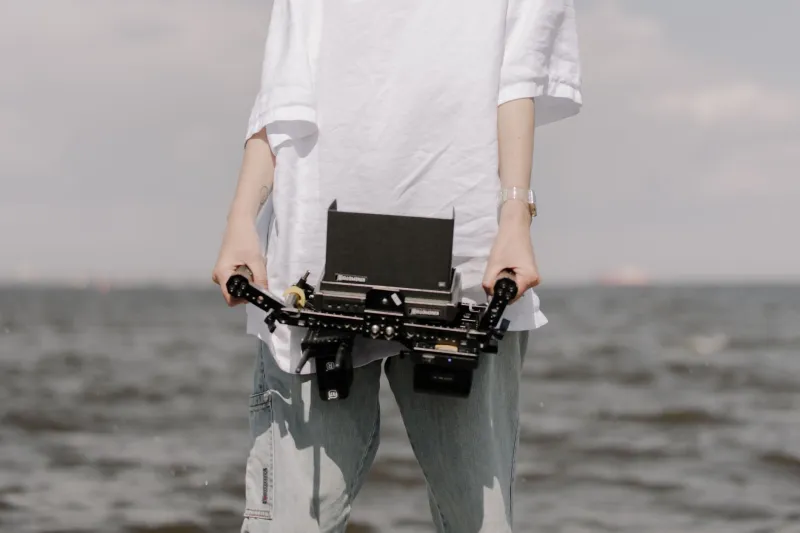
The gimbal. Gimbals are the most-purchased, least-used item in videography. They add 20 minutes of setup and balancing to every location change, and the floaty, hyper-smooth look they produce has become its own visual cliché. A tripod and a steady hand will serve you better on 80% of jobs.
The drone. Everyone wants one. Almost no client project needs one. The regulatory hassle alone — Part 107 certification, airspace checks, insurance — turns a two-hour shoot into a two-day ordeal. Rent one when a job genuinely calls for it.
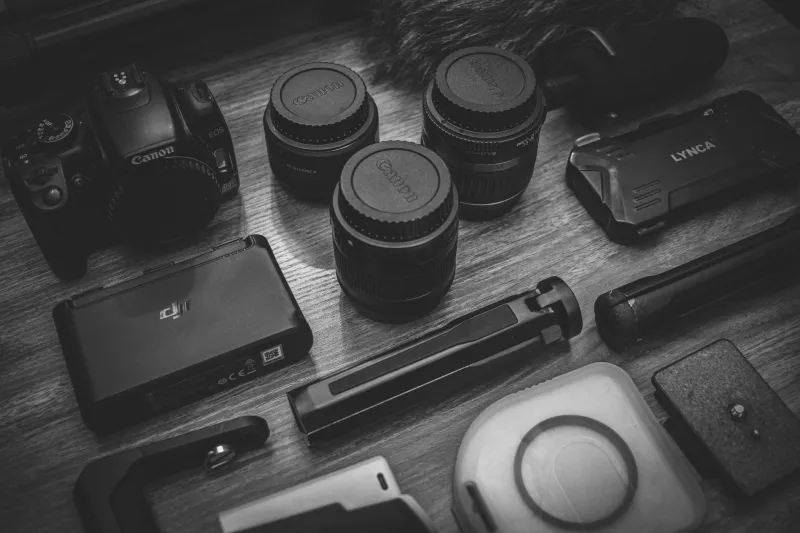
The lens collection. One fast prime and the kit zoom will carry you through years of work. The freelancer with three lenses shoots more than the one with eleven, because she's not standing around deciding.
Where the Real Money Gets Invested
Here's the twist that separates the $5K freelancers from the $500 ones: they reinvest the gear savings into things that actually compound. A subscription to a solid music licensing service. A bookkeeper so taxes don't destroy them in April. A decent website. Better coffee for client meetings, honestly.
One freelancer in Chicago told us her most profitable purchase of the year was a $60 portable hard drive and a strict backup routine. "Nothing I own makes me money," she said. "The way I run my shoots makes me money. The gear just has to not get in the way."
That's the whole philosophy, really. Your kit's job is to disappear so your eye, your process, and your professionalism can do the talking. Spend the minimum required to make that happen, and spend the rest on becoming someone clients want to hire again.
The $200 bag isn't a limitation. It's proof you got the joke early: clients pay for the person, not the plastic.