Death by Committee: How Group Feedback Sessions Are Quietly Strangling Your Best Ideas
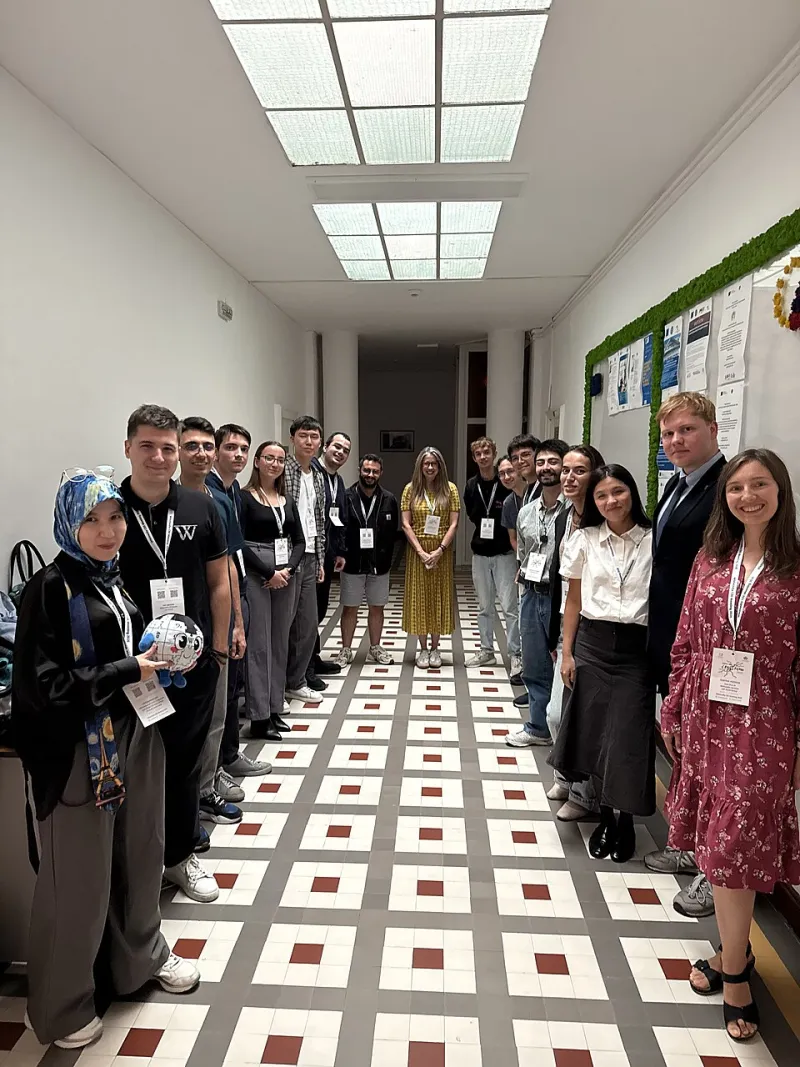
Photo: Zemxer, CC BY-SA 4.0, via Wikimedia Commons
You walk into the room with something that genuinely excites you. Maybe it's a short film concept that feels fresh, a video series with a weird, specific energy, or a brand story that leans into something unexpected. You're nervous, sure, but mostly you're fired up. Then the feedback starts rolling in.
"Have you thought about making it more accessible?" "I feel like the tone might alienate some people." "What if you just... pulled it back a little?"
And just like that, the thing that made your idea yours starts getting sanded down, corner by corner, until what's left is smooth and inoffensive and completely forgettable.
Welcome to the sour note trap — where well-meaning people with genuinely good intentions accidentally turn your lemon of an idea into something that tastes like nothing at all.
Why Group Critiques Go Sideways (Even With Great People)
Here's the uncomfortable truth: most people in a feedback session aren't trying to kill your idea. They're trying to protect you from failure. The problem is that "safe" and "good" are not the same thing, and in a group setting, the instinct to reduce risk tends to dominate.
Social psychologists call this phenomenon groupthink — the tendency for groups to prioritize harmony and consensus over honest, divergent thinking. When someone in the room says something critical, others unconsciously calibrate their own responses to match the temperature of the room. One skeptical voice becomes two, then three, and suddenly the feedback has a momentum that has very little to do with the actual merit of your work.
There's also something called regression to the mean in creative contexts. Groups naturally gravitate toward the middle ground because the middle ground is the easiest position for everyone to agree on. Edgy gets smoothed. Quiet gets amplified. The specific gets generalized. And the result is almost always a blander version of what you started with.
The Loudest Voice Problem
Group feedback also has a hierarchy problem, whether you acknowledge it or not. In most creative circles, certain voices carry more weight — the most experienced person in the room, the client who holds the budget, the collaborator who's been around the longest. Their feedback lands differently, even when it's no more valid than anyone else's.
If the loudest or most influential person in the room expresses doubt early, the rest of the session often becomes about managing that doubt rather than genuinely evaluating the work. You spend the next hour problem-solving around one person's hesitation instead of asking whether that hesitation is even worth solving for.
This is especially dangerous during the development phase, when your idea is still fragile and hasn't fully found its footing yet. Early-stage creative work needs room to breathe. Exposing it to full group scrutiny before it's ready is a little like pulling a plant out of the soil to check if the roots are growing.
What Actually Useful Feedback Looks Like
None of this means feedback is bad. It means undifferentiated feedback is bad. The key is learning to filter the signal from the noise — and that starts with being intentional about who you ask, when you ask them, and what you actually want to know.
Ask specific questions, not open-ended ones. "What do you think?" is an invitation for people to project their own preferences onto your work. "Does this opening scene communicate urgency?" gives them a defined lane to respond in. Specific questions produce specific, useful answers. Open invitations produce vibes.
Separate the feedback stages. Emotional response and analytical critique are two different things, and mixing them in the same conversation creates confusion. Consider a first pass where people just react — what landed, what felt off, what surprised them — before moving into problem-solving mode. Feelings first, fixes second.
Limit your early feedback circle. During development, you don't need a dozen opinions. You need two or three people who genuinely understand what you're trying to do and can engage with the work on its own terms. Save the broader group review for when the idea has enough structural integrity to withstand the pressure.
Protecting the Vision Without Building Walls
There's a fine line between protecting your creative vision and just being defensive. The goal isn't to dismiss feedback — it's to evaluate it against a clear internal standard before you act on it.
One practical technique: give yourself a 48-hour rule. After any feedback session, don't change anything immediately. Let the notes sit. Some of them will still feel relevant two days later, and those are worth taking seriously. Others will dissolve on their own, because they were really about the room's energy in that moment, not about your work.
Another move is to keep a "core document" for every project — a short, written articulation of what the work is trying to do and why. When feedback comes in, you run it against that document. Does this note help the project get closer to what it's actually supposed to be? Or does it pull it in a different direction entirely? That filter alone will save you from a lot of well-intentioned misdirection.
Successful creators — the ones who consistently make work that feels distinctive — tend to be ruthlessly selective about whose feedback they internalize. That's not arrogance. That's craft. Knowing the difference between a note that sharpens your idea and a note that just makes someone else more comfortable is one of the most important skills you can develop.
Rethinking the Feedback Culture on Your Team
If you're running a production team or creative studio, it's worth examining the feedback culture you've built — or inherited. Are your critique sessions set up to generate honest, useful insight? Or are they accidentally rewarding consensus and punishing the unusual?
A few small structural changes can make a big difference. Try having people write their initial reactions privately before the group discussion starts — this prevents the first speaker from setting the tone for everyone else. Rotate who goes first. Actively invite dissenting perspectives, not just from contrarians, but from people who might be seeing the work differently based on their own background or expertise.
And occasionally, protect your creators from the group entirely. Some ideas need a longer runway before they're ready to be stress-tested. A culture that understands that distinction will produce bolder, more original work over time.
The Takeaway
Feedback loops are essential. Community and collaboration are genuinely valuable. But the creative process has a fragile early stage that group dynamics are often poorly suited to handle. The trick is knowing when to open the room and when to keep the door closed a little longer.
Your weirdest, most specific, most you ideas are usually the ones that need the most protection in early development — because they're also the ones that group instinct most reliably tries to sand down. Hold onto them a little tighter. Run them through a smaller, more intentional filter. And trust that the things that make your work feel like yours are usually worth the discomfort of defending them.
The best creative work rarely survives by committee. It survives because someone decided it was worth protecting.